

Our core service
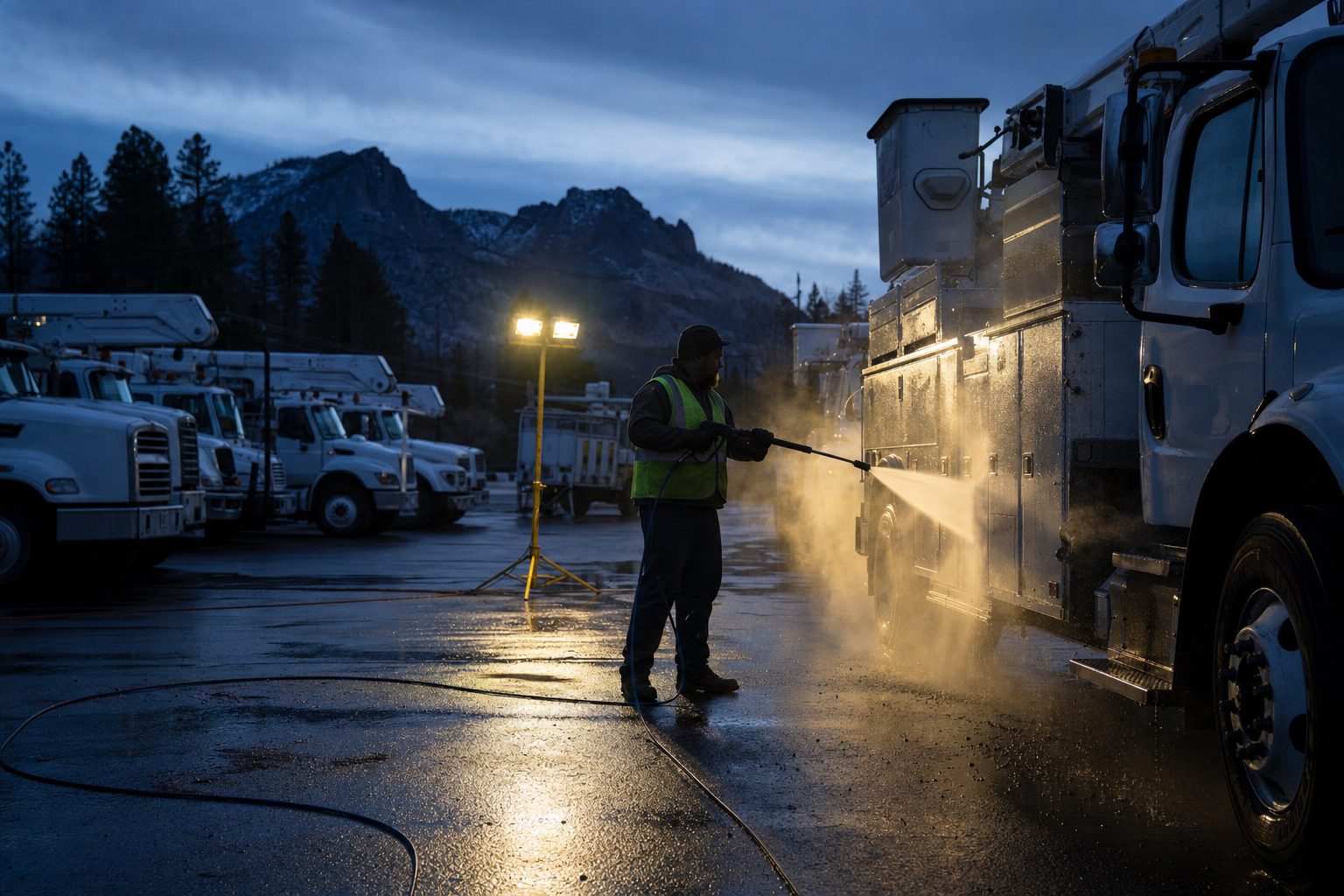
Mobile commercial fleet washing
We bring hot water, commercial-grade equipment and a crew to your yard on a schedule that fits your dispatch. On-road trucks, off-road iron, trailers, buses and everything in between.
- No unit minimum
- Any fleet size, no maximum either
- 7 days a week
- Washed whenever your fleet is parked
- $2M GL
- Insured, with higher limits available
- 100% mobile
- Your trucks never leave your property
Our process
Touch-free, so abrasion doesn’t have to do the work.
Most cheap truck washing is a lot of pressure, or worse, a brush dragged from unit to unit picking up grit along the way. That is how paint gets swirled, how aluminum gets etched, and how decals get lifted at the edges.
We do it differently. Our process breaks down oils, exhaust soot and bonded road film and releases it from the panel, then hot water at controlled pressure carries it away. Nothing scrubs, scours or drags across the surface.
The result is a genuinely clean, streak-free finish without touching the unit — no swirl marks, no lifted decal edges, no damage to bare aluminum.
What we adjust per vehicle
- Surface type — painted steel, bare or polished aluminum, fiberglass, gel coat, vinyl wrap.
- Soil load — highway road film versus caked clay versus cured concrete splatter.
- Sensitive hardware — lightbars, camera pods, antennas, sensors, decals and reflective striping.
- Water temperature and pressure — hot and gentle beats cold and aggressive nearly every time.
Heavy equipment and off-road iron
Excavators, loaders, skid steers, dozers, water trucks and dump beds are a different job. That is caked clay, cured concrete and hydraulic residue, not highway film. Those units get more time, hotter water and a lot more attention on tracks, chains, undercarriages and pivot points. We also pre-sweep and collect the solid material rather than washing it across your yard.
How an account works
Set it up once, then stop thinking about it.
Site walk and fleet inventory
We come to your yard, count units by class, note wraps and sensitive equipment, confirm water access, and look at where runoff goes. No charge, no pressure.
Written per-unit pricing
You get a real number per unit type, a frequency recommendation, and a monthly total. Recurring accounts price well below one-off washes.
Paperwork handled
Certificate of insurance, W-9, additional insured endorsement, vendor onboarding, safety documentation — whatever procurement needs before we’re on site.
A fixed wash window
We work seven days a week and lock a recurring slot around your dispatch schedule — early morning, evening, weekend, whatever fits — so the same trucks are always available when you need them.
Consistent crews, one invoice
Same crew, same standard, one monthly invoice for the whole fleet. If a unit gets missed or something isn’t right, we come back.
Responsible water practices
We take runoff seriously on every job.
Wash water from commercial vehicles isn’t something to be careless with, and most Arizona jurisdictions treat it differently than someone washing their own car in the driveway. We plan every job around keeping wash water out of storm drains.
Standard best management practices we use:
- Environmentally responsible cleaning products, matched to the surface and the site.
- Pre-sweeping to remove loose sediment, trash and debris before any water is applied.
- Wash placement away from storm drains, gutters, inlets, washes and drainage channels — onto landscaping, gravel or a vegetated area wherever the site allows.
- Using your site’s existing wash pad, detention basin, oil-water separator or sanitary sewer connection when one is available.
If your facility has a stormwater pollution prevention plan, an industrial discharge permit, or vendor environmental requirements, send them with your quote request. We build the wash plan around your site’s requirements, and we’ll tell you honestly if a job needs something we’re not set up for.
Insured and documented
$2,000,000 general liability, certificate provided before the first wash, higher limits and additional insured endorsements available for larger contracts.
We show up
A locked recurring window, the same crew every visit, and a phone number that a human actually answers. Miss a unit and we come back for it.
Fleet washing FAQ
Questions fleet managers actually ask.
Do you need our water and power?
Yes — we need access to water on site. We carry our own tanks and generate our own hot water and pressure, but a tank won’t hold enough to get through a full fleet. A standard spigot or hydrant meter connection at your yard is all it takes. We don’t need your power. If water access is a problem at your location, tell us early and we’ll work out a plan before we quote.
Will pressure washing damage our decals, wraps or lightbars?
Not the way we do it. Wraps, reflective striping, decals, lightbars, camera housings and antennas all get lower pressure, wider fan tips and more stand-off distance. On sensitive units we hand-wash the graphics panels. Tell us which units are wrapped and we’ll plan for it.
How often should we wash our fleet?
Most on-road fleets do best on a bi-weekly or monthly cycle. Waste, concrete, excavation and water-truck fleets usually need weekly or bi-weekly. Once you’re on a cycle, each wash is faster and cheaper because we’re removing two weeks of film instead of two years of buildup.
Can you do the whole fleet in one visit?
Depends on unit count and condition, but usually yes — batching a fleet into one visit is normally how we do it. For very large fleets we split the yard across consecutive days so the same number of trucks is available every morning. We work seven days a week and schedule around whenever your equipment is actually sitting still.
Is there a minimum or maximum fleet size?
Neither. We’ll wash three trucks or three hundred. Recurring accounts price better than one-offs regardless of size, and if your equipment is spread across several job sites instead of parked in one yard, we can meet your crews on site — early morning before they scatter usually works best for that.
What about engine bays and interiors?
We are an exterior washing company. We do not do engine degreasing, interior detailing or upholstery. If a unit needs an engine bay cleaned we’ll tell you up front so you can route it to a shop that’s set up for oil and solvent capture.
Do you carry insurance and can you be added as a vendor?
Yes. BMP Services, LLC dba Platinum Edge Services carries $2,000,000 in general liability coverage and can increase limits or add your company as an additional insured for larger contracts. We’ll provide a COI, W-9 and any vendor paperwork your procurement team needs.
Put your fleet on a schedule.
Tell us your unit count and where they park. We’ll walk the yard and quote it per unit, in writing.